

Skincare Guide
How to Use Quiet Dose Barrier Repair Serum:A Complete Application Guide
The right order, the right pairings, and the common mistakes to avoid — so your barrier serum works exactly as it is designed to.
Introduction
A barrier-repair serum is one of the most useful products in a modern skincare routine — and also one of the easiest to misuse. The Quiet Dose Barrier Repair Serum is designed to be forgiving, but its real benefits appear when it is applied consistently, in the right order, and with the right expectations.
This guide is a practical, step-by-step manual for using the serum. It covers who should use it, how to apply it, when to use it, what to pair it with, what to avoid, and how long it takes to see meaningful results. Whether you are building a routine around retinol, recovering from over-exfoliation, or simply trying to keep your skin calm and hydrated, the rules here will help you get the most out of every drop.
What Quiet Dose Barrier Repair Serum does
The skin barrier is the outermost layer of the epidermis, made up of lipids, ceramides, cholesterol and fatty acids. When it is intact, skin retains moisture, keeps irritants out, and tolerates active ingredients well. When it is compromised, the skin becomes tight, dry, reactive and less able to benefit from the rest of a routine.
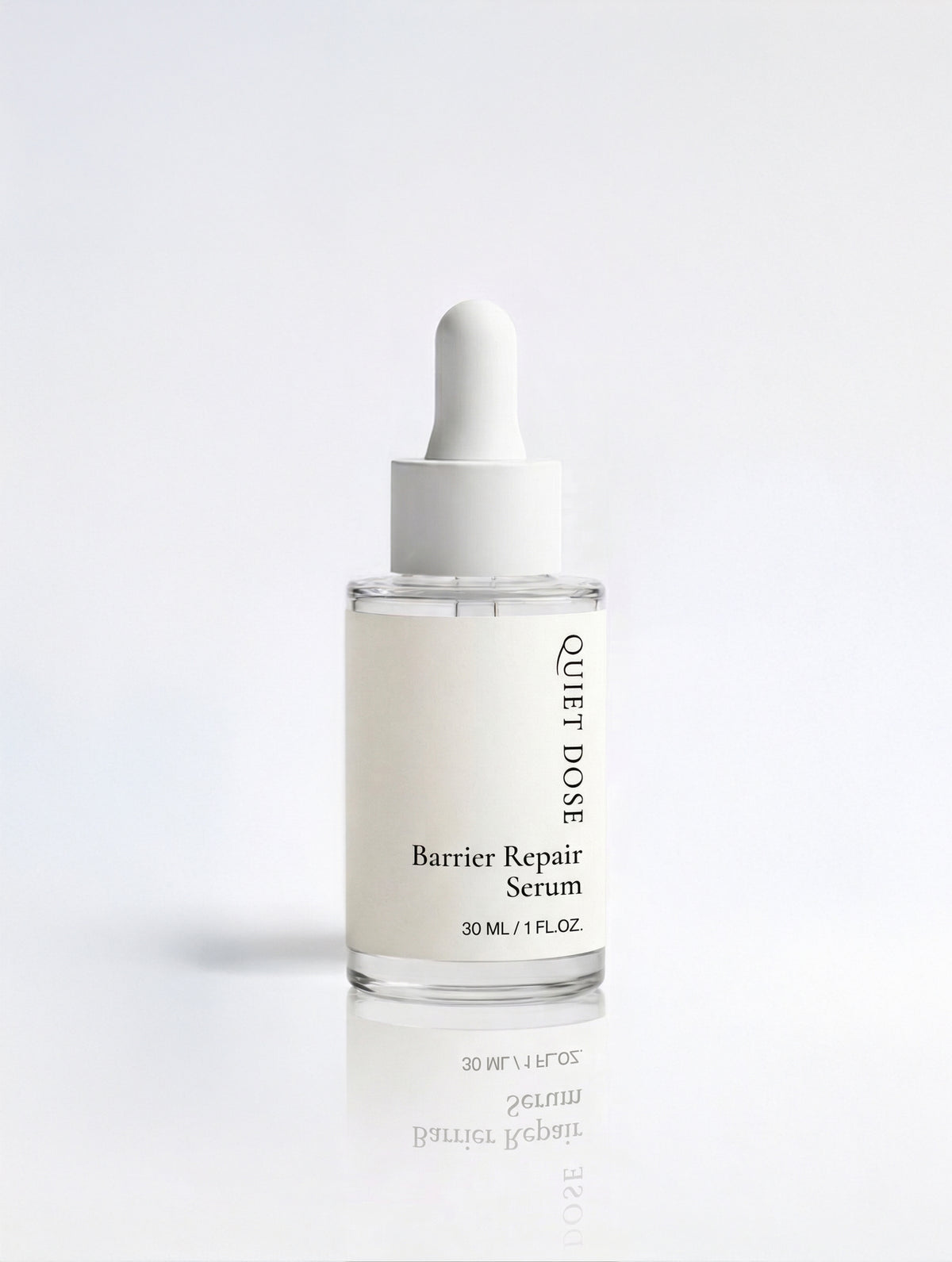
Quiet Dose Barrier Repair Serum is a lightweight, water-based serum formulated to replenish ceramides, calm visible redness and support the barrier's natural repair function. Its key ingredients include a multi-ceramide complex, panthenol, ectoin and squalane — all chosen for their documented roles in barrier support, hydration and soothing.
Unlike retinol or vitamin C, this serum is not an active corrector. It does not resurface the skin, fade pigmentation or stimulate collagen turnover. Instead, it creates the stable environment those actives need in order to work without causing irritation. That makes it a foundational step, not a dramatic one.
- • Replenishes ceramides to strengthen the moisture barrier
- • Reduces transepidermal water loss for longer-lasting hydration
- • Calms visible redness and post-cleanse tightness
- • Layers comfortably with retinol, vitamin C and exfoliating acids
Who should use it
The serum is designed for anyone whose skin barrier needs support, but a few groups are especially likely to benefit.
Retinol or acid users
If you are using retinol, exfoliating acids or in-clinic treatments, the barrier serum acts as a buffer. It helps reduce the dryness and reactivity that often accompany active routines.
Sensitive or reactive skin
Fragrance-free and minimal, the formula is well suited to skin prone to redness, stinging, flushing or tightness after cleansing.
Post-treatment recovery
After microneedling, chemical peels, lasers or aggressive exfoliation, a ceramide serum can help support recovery — once your practitioner clears you to resume skincare.
Beauty-tech users
Devices like the FOREO BEAR 2 or UFO 3 work best when the barrier is calm. The serum restores comfort after device sessions.
If your skin is already healthy, balanced and tolerating actives without irritation, you may not need a dedicated barrier serum. But for anyone experiencing dryness, reactivity or actives fatigue, it is a sensible addition.
Application protocol
Step-by-step guide: How to apply the serum
The way you apply a serum matters almost as much as the formula itself. Pressing, not rubbing, and layering from thinnest to thickest will give the best results.
- 1
Cleanse with a gentle, low-pH cleanser
Start with a non-stripping cleanser. Avoid foaming cleansers with high pH or sulfates, which can weaken the barrier before the serum even touches your skin.
- 2
Pat the skin dry, do not rub
Use a clean towel and gently press the skin until it feels slightly damp but not wet. A damp surface helps the serum spread, but excess water dilutes it.
- 3
Dispense two to three drops
Warm the serum between your fingertips for a few seconds. This helps it spread evenly across the face and neck without pulling at the skin.
- 4
Press and glide, do not rub aggressively
Start at the center of the face and press outward, then gently glide along the jawline, cheeks and forehead. Avoid dragging or tugging the skin.
- 5
Wait 30 to 60 seconds
Let the serum absorb before adding the next layer. It should feel slightly tacky, not wet or pooled on the surface.
- 6
Seal with a moisturizer
A barrier serum is not a moisturizer. Follow with a cream or lotion that locks in hydration and protects the barrier through the night or day.
When to use it (morning, evening, or both)
Quiet Dose Barrier Repair Serum can be used in the morning, the evening, or both. The best schedule depends on your skin's needs and the rest of your routine.
Morning use
In the morning, apply the serum after any treatment actives like vitamin C, then follow with moisturizer and SPF. It helps the skin stay hydrated and calm under makeup, sunscreen and environmental stress.
Evening use
At night, the serum supports the skin's natural repair cycle. Use it after retinol once it has absorbed, or on its own on nights when you are resting from actives.
For a compromised barrier, twice-daily use is ideal. Once the barrier feels strong and resilient, you can drop back to once a day, usually in the evening, as maintenance.
What products to pair it with
The serum is a team player. It works best when the surrounding routine is also barrier-friendly, hydrating and protective.
A gentle, low-pH cleanser
The foundation of any barrier-repair routine is a cleanser that removes impurities without stripping lipids. Look for creamy, gel-cream or milk textures with a skin-friendly pH.
A hydrating moisturizer
A barrier-supportive moisturizer seals the serum in and prevents transepidermal water loss. This is the step that turns the serum from a treatment into a complete barrier routine.
Daily SPF 30+
Sun exposure is one of the fastest ways to undo barrier repair. A broad-spectrum sunscreen every morning protects the work the serum does overnight.
Retinol or vitamin C, used thoughtfully
The serum does not replace actives — it supports them. Use retinol at night, vitamin C in the morning, and the barrier serum as the calming layer in between. See our best anti-aging skincare routine for a full example.
What to avoid when using the serum
Even a well-formulated serum cannot compensate for habits that constantly damage the barrier. Avoid these common mistakes to get the full benefit.
- Over-exfoliating. Daily acid toners, aggressive scrubs and frequent peels keep the barrier in a state of recovery. Reduce exfoliation to once or twice a week while rebuilding.
- Stacking too many strong actives. Retinol, acids, vitamin C and benzoyl peroxide can all be useful, but using several on the same night overwhelms the skin. Introduce one active at a time.
- Skipping moisturizer. A serum delivers ingredients; a moisturizer seals them in. Using the serum without a moisturizer is like painting a wall without primer — it will not hold.
- Hot water and harsh cleansers. Hot water strips lipids. High-pH foaming cleansers disrupt the acid mantle. Use lukewarm water and a gentle cleanser.
- Applying it to soaking-wet skin. Excess water dilutes the formula and prevents proper absorption. Pat the skin dry first.
- Expecting instant transformation. Barrier repair is a four-to-eight-week game. Early comfort appears within days, but deep resilience builds over time.
How long before you see results
Barrier-repair products do not announce themselves with an overnight glow. Their results are cumulative, and the timeline depends on how compromised the barrier is at the start.
Week 1
The skin feels less tight after cleansing. Post-active stinging reduces, and the complexion looks calmer. These are comfort signals, not dramatic visual changes.
Weeks 2–4
Flakiness fades, texture looks smoother, and makeup sits more evenly. The skin tolerates retinol and acids better than before. Hydration becomes more consistent.
Weeks 6–8
The barrier reaches a resilient baseline. Reactivity to weather, actives and stress drops, and the skin looks plumper, healthier and more consistently comfortable.
For a more detailed timeline, read our Quiet Dose Barrier Repair Serum results guide. It breaks down what to expect week by week and how to maximize the visible outcome.
Frequently Asked Questions
Should I apply Quiet Dose Barrier Repair Serum to wet or dry skin?
Dry skin is best. After cleansing, gently pat the face until it feels slightly damp but not wet, then apply the serum. Excess water can dilute the formula and push product around before it has a chance to absorb.
Can I use it with retinol?
Yes. The most comfortable approach is to apply retinol first, allow it to absorb for a few minutes, then layer the barrier serum on top as a buffer. On nights when the skin feels reactive, you can use the serum alone or apply it before retinol to reduce direct contact irritation.
Can I use it with vitamin C?
Yes, in the morning. Apply vitamin C to clean, dry skin first, wait one to two minutes, then follow with the barrier serum and a moisturizer. The serum adds a calming, hydrating layer without interfering with vitamin C's antioxidant activity.
Can I use it around my eyes?
The formula is fragrance-free and designed for sensitive skin, so a small amount around the orbital bone is generally well tolerated. Avoid applying it directly to the eyelid or too close to the lash line.
How much serum should I use?
Two to three drops is enough for the face. Press or glide it over the skin rather than rubbing aggressively. A thin, even layer absorbs quickly and layers well under moisturizer and SPF.
Can I use it with other ceramide products?
Yes. Ceramides are skin-identical lipids and layering multiple ceramide products is generally safe. The key is to avoid overloading the skin with too many occlusive layers if you are also prone to congestion.
Do I need to use it both morning and night?
For the fastest barrier recovery, twice daily use is ideal. If you prefer a simpler routine, use it at night when the skin does most of its repair work, and add the morning layer once the barrier feels stronger.
Will it clog pores or cause breakouts?
The formula is lightweight, water-based and non-comedogenic by design. Most users find it comfortable, but every skin is different. If you are breakout-prone, start with a smaller amount and avoid layering it under heavy occlusive products.
Can I use it after a chemical peel or microneedling?
It can be an excellent post-treatment support product, but only after your practitioner has cleared you to resume skincare. Always follow the specific aftercare protocol provided by your clinic.
What happens if I miss a day?
Missing one day will not reset your progress. Ceramide replenishment is cumulative, so simply resume your routine at the next application. Consistency over weeks matters more than perfection.
Can it replace my moisturizer?
No. It is a serum, not a moisturizer. It delivers barrier-supporting ingredients in a lightweight base, but it should still be sealed in with a moisturizer and, in the morning, SPF.
Is it suitable for acne-prone skin?
Yes, the fragrance-free, minimalist formula is generally suitable for acne-prone skin. It can help reduce the redness and tightness that often accompany acne treatments. If you are using prescription actives, introduce it slowly.
How do I store it?
Keep the bottle in a cool, dry place away from direct sunlight and heat. A bathroom cabinet or vanity drawer is ideal. The formula does not require refrigeration.
Can I use it with the FOREO BEAR 2 or UFO 3?
Yes. Use the serum after the FOREO BEAR 2 with its conductive serum, or after a UFO 3 treatment, to restore comfort and support the barrier following device use.
What is the best order in a full routine?
Cleanser → treatment serums (vitamin C or retinol, if using) → Quiet Dose Barrier Repair Serum → eye cream → moisturizer → SPF in the morning. Adjust based on what your skin tolerates.
Final thoughts
The quiet step that makes the rest of your routine work
Using Quiet Dose Barrier Repair Serum correctly is not complicated, but it does require consistency. Cleanse gently, apply to dry skin, press rather than rub, seal with a moisturizer, and protect with SPF in the morning. Pair it with retinol or vitamin C thoughtfully, and avoid over-exfoliation and harsh cleansers.
The reward is not a dramatic overnight transformation. It is skin that feels comfortable, looks calmer, and tolerates the actives you care about without the usual irritation. For anyone building a long-term routine around retinol, LED devices, microcurrent or anti-aging, that is exactly the foundation worth investing in.
For a deeper ingredient breakdown, full review and current pricing, read our complete Quiet Dose Barrier Repair Serum review. Then check the latest price directly at Quiet Dose to see what offers are currently available.