

Skincare Guide
Men's Skincare Routine:A Complete Beginner's Guide
A calm, evidence-based path to better skin — without the gendered marketing. Learn what men's skin actually needs, which ingredients matter, and how to build a routine that works.
A practical five-step routine built around ingredients, not gender labels.
Introduction
More men are investing in skincare than ever before — and for good reason. The best routines are built on a small number of well-understood ingredients, applied consistently, and matched to the individual's skin rather than to a marketing demographic. Yet the men's skincare aisle is often its own confusing world: dark packaging, aggressive fragrance, promises of instant transformation and language that suggests male skin needs an entirely separate chemistry.
The truth is more practical. Men's skin does have some measurable differences from women's skin — it tends to be thicker, oilier and more affected by daily shaving — but those differences do not require a separate branch of skincare science. A gentle cleanser, a morning antioxidant, a supportive moisturizer, a barrier-repairing serum and a nighttime retinol are the same five pillars that dermatologists recommend across genders. The question is not whether a product is "for men," but whether it suits your skin type, your concerns and your goals.
This guide walks through a complete beginner's routine designed for men who want clearer, healthier, more resilient skin without overcomplicating their mornings or evenings. It explains what the skin actually needs, why each step matters, and which Poshbrand-reviewed products fit naturally into the routine. No exaggerated claims, no gendered gimmicks — just a straightforward plan grounded in dermatology and real-world usability.
Is men's skin different?
Yes, but the differences are smaller than the marketing suggests. On average, men's skin is about 25 percent thicker than women's skin, with a higher collagen density. That thickness gives men a slight structural advantage in aging, but it also means that many men experience more oil production, larger pores and a greater tendency toward congestion and breakouts. Testosterone is the main driver here: it stimulates sebaceous activity and can make the skin's surface feel greasier by midday.
Shaving is another variable that deserves attention. Every shave is a mild form of physical exfoliation that can strip lipids, weaken the skin barrier and create small entry points for irritation and sensitivity. Men who shave daily often notice redness, dryness, razor bumps and a stinging sensation when they apply products with high concentrations of alcohol or fragrance. This means the male routine should be especially careful about barrier support and avoidance of harsh surfactants.
At the same time, the universal concerns apply equally. Sun damage, dehydration, fine lines, pigmentation, wrinkles and loss of firmness do not care about gender. A man in his thirties worrying about the first signs of aging is dealing with the same biological processes as a woman in her thirties. The same ingredients — retinol, vitamin C, niacinamide, ceramides, hyaluronic acid and peptides — are effective across the board when used correctly.
Dermatologists consistently recommend choosing products based on skin type and concern rather than gender labeling. A man with dry, sensitive skin will benefit from the same barrier-supporting formulas as a woman with dry, sensitive skin. A man with oily, acne-prone skin needs the same non-comedogenic, lightweight textures that a woman with the same profile needs. The goal of this guide is to help you read your own skin accurately and build a routine around that reading.
Step 1: Cleanse
Cleansing is the foundation of every routine. The goal is not to strip the skin until it feels tight and squeaky; that sensation usually means the cleanser has removed too much of the skin's natural lipid barrier. The goal is to remove sweat, oil, sunscreen, pollution and the day's accumulation without disrupting the barrier. A good cleanser leaves the skin clean, comfortable and ready to absorb the products that follow.
For most men, a gentle, low-pH gel or cream cleanser is the best starting point. Foaming cleansers can be fine if they are sulfate-free, but many men default to heavily foaming, bar-soap-style products that over-cleanse and leave the skin vulnerable. If you shave daily, consider a cleanser that doubles as a pre-shave softener and contains soothing ingredients such as aloe, allantoin or panthenol.
A well-designed cleansing tool can also help. Sonic facial devices use soft pulsations to lift debris from pores and improve the thoroughness of a cleanse without the abrasiveness of a scrub. FOREO's LUNA range, for example, is engineered for gentle daily cleansing and can be a useful addition for men who want a deeper clean without irritation. You can explore the full range in our FOREO buying guide.
How to use it
- • Wash with lukewarm water, not hot water, which can strip the skin.
- • Use a coin-sized amount of cleanser and massage for 30 to 60 seconds.
- • Rinse thoroughly and pat dry with a clean towel — do not rub aggressively.
- • Cleanse in the morning and again in the evening, especially if you wear SPF or commute in a polluted environment.
Step 2: Vitamin C (morning)
Vitamin C is the single most useful addition to a morning routine. As a daytime antioxidant, it helps neutralize the free radicals generated by UV exposure, pollution and blue light before they can damage collagen and contribute to dullness, pigmentation and premature aging. It also brightens the complexion, helps fade post-inflammatory marks and supports the enzymes involved in collagen production. Used under sunscreen, it is one of the most effective protective steps available in skincare.
For men, vitamin C addresses some of the most common concerns: uneven tone from sun exposure, post-shave discoloration, and a generally tired or dull appearance. It is lightweight, layers easily under moisturizer and SPF, and does not require the slow introduction that retinol demands. Most men can start using it daily from the first week.
A strong entry point is the RoC Multi Correxion Revive + Glow Daily Serum. It is a stable, lightweight morning serum built around a well-tolerated vitamin C derivative, designed to brighten and even tone without the instability that can plague older L-ascorbic acid formulas. It sits comfortably under the RoC Revive + Glow Moisturizer and a sunscreen, and it pairs naturally with the retinol step used at night.

RoC
RoC Multi Correxion Revive + Glow Daily Serum
A brightening morning serum that layers cleanly under moisturizer and SPF, designed to even tone and protect against daily oxidative stress.
Step 3: Moisturize
Moisturizer is not optional, even for oily skin. When skin is dehydrated, it often compensates by producing more oil, which can lead to a shiny midday surface and a higher likelihood of clogged pores. A well-formulated moisturizer replenishes water, supports the barrier and locks in the active ingredients applied underneath. The key is choosing the right texture for your skin type.
Men with oily or combination skin should look for gel-cream or lightweight lotion textures that contain humectants like hyaluronic acid or glycerin and a modest amount of ceramides or squalane. Men with dry or mature skin may prefer a richer cream. Fragrance-free formulas are generally preferable, especially for men who shave, because fragrance is one of the most common triggers of post-shave irritation.
The RoC Revive + Glow Moisturizer is a strong daily option. It combines hydration with vitamin C in a cushioning texture that works both morning and evening, sits well under SPF, and layers cleanly over the Revive + Glow Daily Serum. It is a practical choice for men who want one moisturizer that does more than one job.

RoC
RoC Revive + Glow Moisturizer
A daily moisturizer that hydrates, brightens and sits cleanly under SPF — a simple, high-value step for any morning routine.
Step 4: Repair the skin barrier
The skin barrier is the outer layer that keeps moisture in and irritants out. Shaving, harsh cleansers, cold weather, central heating, retinol and even daily stress can weaken it. When the barrier is compromised, skin feels tight, stings when products are applied, looks flushed, and becomes more reactive to ingredients that were previously fine. Repairing and maintaining the barrier is especially important for men who shave, because every shave is a minor stress event.
A barrier-focused serum is a flexible step. It can be used every morning, every evening, or only on the nights when skin feels dry or reactive. Look for formulas that include ceramides, cholesterol, fatty acids, panthenol, squalane or ectoin. These ingredients mimic the skin's own lipids and help restore the protective layer without adding heaviness.
The Quiet Dose Barrier Repair Serum fits this role perfectly. It is a fragrance-free ceramide serum designed to support the skin barrier for sensitive, reactive or compromised skin. It layers well under moisturizer and SPF, and it can be applied after retinol to help buffer dryness. It is one of the most versatile additions to a beginner's routine because it prevents the irritation that often causes new users to quit before they see results.
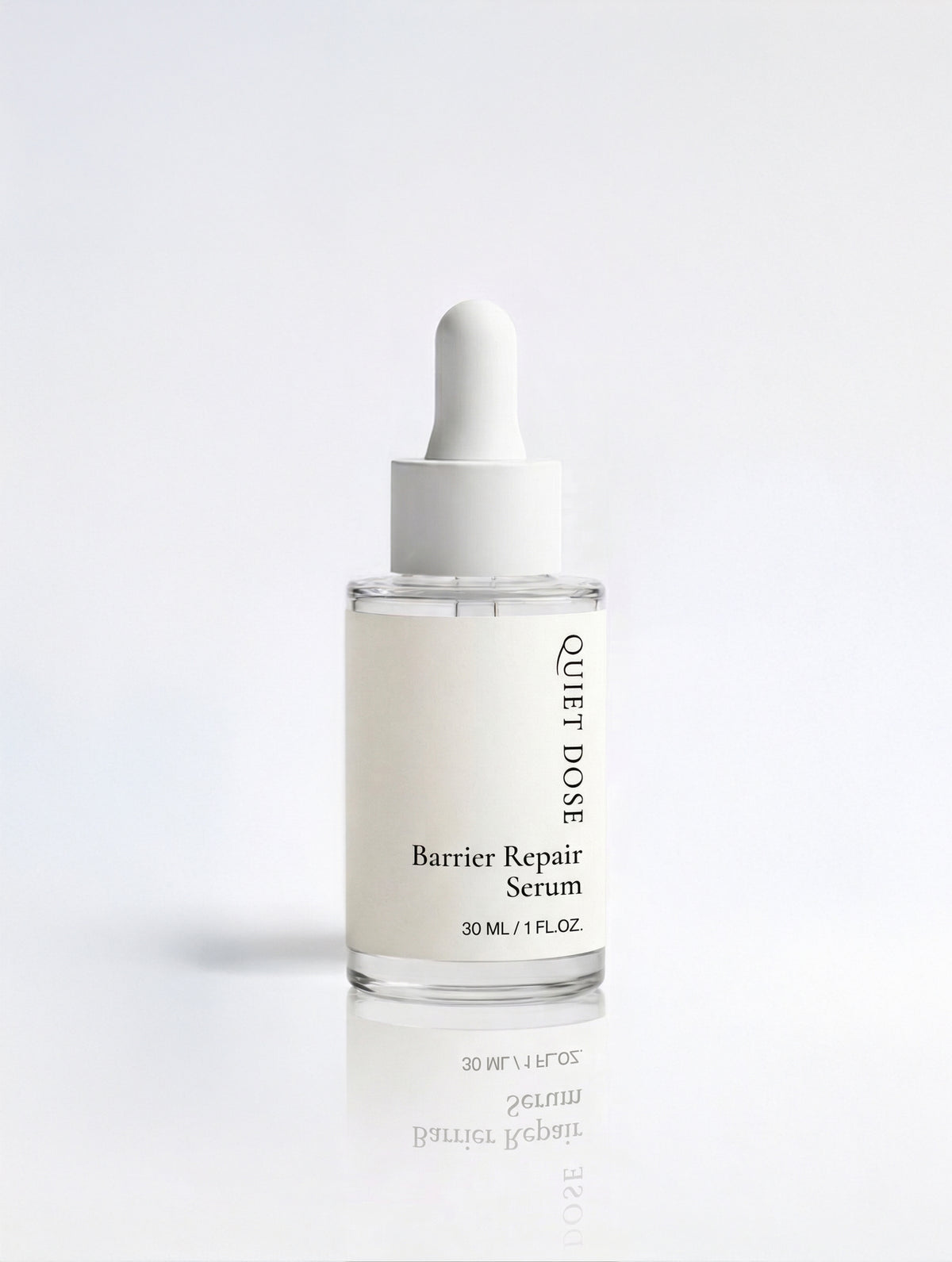
Quiet Dose
Quiet Dose Barrier Repair Serum
A fragrance-free ceramide serum that helps repair and maintain the skin barrier — ideal after shaving, during retinol introduction, or whenever skin feels reactive.
Step 5: Anti-aging with retinol
Retinol is the ingredient most dermatologists point to when asked about evidence-based anti-aging. It is a vitamin A derivative that increases cell turnover, stimulates collagen production, refines texture, softens fine lines and helps even out pigmentation. For men in their late twenties and beyond, it is the most meaningful single addition to an evening routine. The results are not overnight, but they are cumulative and well documented.
The main challenge with retinol is tolerance. Introducing it too quickly can cause dryness, flaking, redness and a tight, uncomfortable sensation. The correct approach is to start slowly, use a supportive moisturizer and barrier serum, and never skip daily SPF. Most men should begin two to three nights per week, then gradually build to every other night and finally to nightly use as the skin adapts.
The Pure RoC Retinol Starter Set is designed for exactly this introduction. It pairs a buffered retinol formula with a supportive moisturizer, giving beginners a complete nightly system without the guesswork of mixing and matching products. RoC's retinol heritage is one of the longest in mass skincare, and the starter set is a disciplined, low-risk way to begin.

RoC
Pure RoC Retinol Starter Set
A beginner-friendly retinol system that pairs a gentle retinol treatment with a supportive moisturizer — the disciplined entry point for long-term anti-aging.
Retinol rules for beginners
- • Start two to three nights per week for the first two to four weeks.
- • Apply to clean, dry skin, then wait a few minutes before adding moisturizer.
- • Use the Barrier Repair Serum on nights when skin feels reactive or dry.
- • Never skip SPF in the morning — retinol increases sun sensitivity.
- • Be patient. Visible texture and line improvement typically appears after eight to twelve weeks.
Common skincare mistakes men make
Most skincare failures come from consistency, not product choice. Men new to skincare often make a few predictable mistakes that slow progress or cause irritation. Avoiding them is half the battle.
Washing with harsh soap
Bar soap and foaming body wash are usually too alkaline for facial skin. They strip the barrier and can worsen both oiliness and dryness. Use a dedicated facial cleanser.
Skipping moisturizer
Oily skin does not mean hydrated skin. Skipping moisturizer can trigger more oil production and make the skin look shinier by midday.
Forgetting sunscreen
Sunscreen is the single most effective anti-aging product available. Without it, retinol and vitamin C cannot protect the skin from the damage they are trying to repair.
Using too many products at once
More products do not mean better results. A simple, consistent routine beats a complicated one that is abandoned after two weeks.
Expecting overnight results
Skincare is a long game. Hydration may improve within days, but retinol and barrier repair require weeks of consistent use to show meaningful change.
Buying by gender label
"For men" products are often standard formulas with different packaging and fragrance. The ingredient list and your skin type matter far more than the label.
A simple daily routine
The routine below is designed to be achievable. It uses five product categories, leaves room for adjustment, and can be completed in five to ten minutes morning and evening. Start with all five steps, then simplify or intensify based on how your skin responds.
| Morning | Evening |
|---|---|
| Gentle cleanser | Gentle cleanser |
| Vitamin C serum | Retinol (2–3 nights/week, building up) |
| Moisturizer | Barrier repair serum (on dry or reactive nights) |
| SPF 30+ | Moisturizer |
On retinol nights, apply the retinol to clean, dry skin, then follow with moisturizer. On non-retinol nights, you can use the barrier serum alone or before moisturizer for extra support. Every morning, sunscreen is the final step — no exceptions.
Frequently asked questions
Do men need different skincare products than women?+
Not usually. Dermatologists generally recommend choosing products based on skin type, skin concerns and ingredient science rather than gender marketing. A man with dry skin needs hydration; a man with oily skin needs lightweight, non-comedogenic formulas. The active ingredients — retinol, vitamin C, niacinamide, ceramides, hyaluronic acid — work the same way regardless of gender.
Is men's skin really that different?+
Men's skin tends to be thicker, oilier and more collagen-dense than women's skin, largely due to testosterone. Shaving also introduces unique irritation and sensitivity. But the fundamentals of good skincare — cleanse, protect, moisturize, repair, treat — remain the same, and the visible signs of aging affect everyone.
Can men use retinol?+
Yes. Retinol is one of the most studied anti-aging ingredients and works for men exactly as it does for women. Start slowly — two to three nights per week — and always use daily SPF, because retinol increases sun sensitivity.
Should men use vitamin C?+
Yes, especially in the morning. Vitamin C is a daytime antioxidant that helps neutralize free radicals from UV, pollution and blue light, supports a brighter complexion and works beautifully under sunscreen.
What's the best skincare routine for beginners?+
A simple five-step routine: gentle cleanser, vitamin C serum in the morning, moisturizer, barrier-supporting serum when needed, and retinol at night. Add SPF every morning. Consistency matters more than the number of products.
Should men use a separate eye cream?+
An eye cream is helpful if you are targeting dark circles, puffiness or fine lines around the eyes. The skin around the eyes is thinner and often benefits from a dedicated texture. Otherwise, a well-formulated facial moisturizer can be applied gently to the orbital area.
Can men use the same moisturizer as women?+
Yes. What matters is the formula's match to your skin type. Oily or acne-prone skin usually prefers gel or lightweight lotions; dry skin benefits from richer creams with ceramides and humectants. Gender labels do not change the science.
How long does it take to see results?+
Hydration and comfort can improve within days. Vitamin C usually brightens within two to four weeks. Retinol takes eight to twelve weeks for visible texture and line improvement. Barrier repair typically shows calmer, more resilient skin after four to eight weeks of consistent use.
Do I need a skincare device as a man?+
No device is essential, but a well-chosen tool can make a routine more effective or enjoyable. A gentle sonic cleanser can help with deeper cleaning, and microcurrent or LED devices can support anti-aging goals. Our FOREO guides explain which device fits which concern.
Is men's skincare just marketing?+
Much of it is. Many "men's" products are standard formulas repackaged with darker bottles, stronger fragrance and aggressive messaging. Focus on the ingredient list, your skin type and reputable brands rather than gendered packaging.
Final verdict
Good skincare is not about gender. It is about understanding your skin type, choosing ingredients with real evidence behind them, and applying them consistently. Men who build a routine around a gentle cleanser, a morning vitamin C, a reliable moisturizer, a barrier-supporting serum and a nighttime retinol will cover the vast majority of common skin concerns — from dullness and shaving irritation to the first signs of aging.
The Poshbrand-reviewed products in this guide — the RoC Multi Correxion Revive + Glow Daily Serum, RoC Revive + Glow Moisturizer, Quiet Dose Barrier Repair Serum and Pure RoC Retinol Starter Set — offer a complete, beginner-friendly system that works regardless of marketing labels. Pair them with a FOREO device for deeper cleansing or facial toning if you want to layer technology into the ritual, and always finish the morning with a broad-spectrum SPF.
Start simple, stay consistent, and let the ingredients do the work. The best skin comes from the routine you actually follow.
Build your routine today
Explore the detailed Poshbrand reviews for each product, compare the latest prices through our affiliate links, and read our FOREO guides if you want to add a device to your ritual.