

Buying Guide · Microcurrent
Best Microcurrent Devices (2026): 5 Top Facial Devices Compared
An independent editorial comparison of five popular at-home microcurrent devices, based on published information rather than hands-on testing — with clear guidance on who each one is actually right for.
Introduction
Microcurrent is one of the few at-home beauty technologies with a long clinical pedigree. It was first developed in the 1980s as a medical rehabilitation tool for conditions such as Bell's palsy, where it was used to re-educate weakened facial muscles. Decades later, aesthetic practitioners recognized that the same low-level electrical signals could be applied to healthy skin to encourage a more toned, contoured appearance — first in medical spas, and eventually in the compact rechargeable devices now used at home.
The category has grown quickly for three reasons. Consumers are increasingly drawn to non-invasive alternatives to injectables. Modern devices have become dramatically easier to use, with two-minute protocols replacing the fifteen-minute routines of a decade ago. And a generation of skincare enthusiasts has come to expect subtle visible changes from consistent, at-home rituals rather than occasional in-office treatments.
The short answer for most buyers: the FOREO BEAR 2 is the best microcurrent facial device overall in 2026, thanks to its adaptive intensity and a two-minute daily protocol that people actually stick with. NuFACE Trinity+ suits those who prefer longer, FDA-cleared ritual-style sessions, ZIIP HALO is the most customizable option, TheraFace PRO consolidates multiple modalities, and MyoLift Mini brings a professional-style experience home.
This guide compares five widely available at-home microcurrent devices that we selected in 2026 for their market presence, public documentation and distinct approaches. The selection and ranking reflect PoshBrand's editorial judgment rather than an exhaustive market survey. It is an editorial analysis grounded in publicly available specifications, published research and usability considerations — not a first-person testing report. By the end, you will understand how microcurrent works, what it can and cannot do, how these devices genuinely differ, and which one is best suited to your skin, your routine and your budget.
A note on terminology: "facial toning device" is a broader term that can also describe tools using LED, radio frequency, sonic vibration or manual massage. If you are searching for the best facial toning device, be aware that not every toning tool uses microcurrent. This guide focuses specifically on at-home microcurrent devices, which is why the best microcurrent device for you depends on protocol, comfort and consistency rather than on headline features alone.
What Is Microcurrent Technology?
Microcurrent refers to electrical stimulation delivered at intensities typically between 25 and 500 microamperes — millionths of an ampere. This is well below the threshold most people perceive as strong stimulation; the sensation is usually described as a faint tingle, a gentle warmth, or nothing at all. Because the current is close in magnitude to the body's own bioelectrical activity, many users report that it is well tolerated, although individual experience varies.
In an aesthetic context, microcurrent is used to gently stimulate the superficial muscles of the face. Laboratory research has reported changes in cellular adenosine triphosphate (ATP) — the molecule cells use to store and release energy — in tissue exposed to low-level current, and smaller aesthetic studies have reported changes in muscle tone and circulation. These findings do not, on their own, prove visible cosmetic results from modern at-home devices. What the industry calls "toning" is best understood as a possible, modest and variable firming effect, rather than the dramatic, immediate change of an in-clinic treatment or injectable.
It is important to keep expectations calibrated. Microcurrent is positioned as a maintenance tool, and the evidence for at-home devices is more limited than for established skincare ingredients such as retinoids. Some users report subtle contour improvements over months of use, but results are not guaranteed and are not proven to prevent aging or deliver lasting lift. It is not a replacement for surgery, filler or professional resurfacing; manufacturer language about lifting or sculpting should be read in that limited context.
How Microcurrent Devices Work
At-home microcurrent devices deliver low-level current through two conductive metal probes, spheres or rings. A water-based conductive gel is applied between the device and the skin so that the current can travel efficiently; without it, the circuit is broken and the device does little. As the device glides along defined facial pathways — typically upward and outward along the jaw, cheeks and brow — the muscles beneath are gently stimulated.
Modern devices differ mainly in three areas. First, how they measure and adapt current to the individual: FOREO's BEAR 2, for example, reads skin conductivity many times per second and adjusts intensity automatically, while NuFACE relies on the user to select an intensity level manually. Second, how their treatment protocols are structured: some favor short daily sessions, others longer, less frequent ones. Third, how they integrate additional modalities such as LED, warming, sonic vibration or app-based guidance.
These differences are not trivial. They determine whether a device will realistically be used according to its recommended schedule — which matters because any potential benefit may depend on regular use, although regular use does not guarantee results — or whether it will quietly retire to a bathroom drawer after six weeks. For a detailed head-to-head of the two category leaders, see our FOREO BEAR 2 vs NuFACE Trinity+ comparison.
Microcurrent vs Nanocurrent
Nanocurrent is a closely related technology that appears increasingly often in this category — most visibly in the ZIIP HALO, which combines both. Where microcurrent operates in the microampere range (roughly 25–500 µA), nanocurrent uses currents roughly a thousand times smaller, measured in nanoamperes.
The practical distinction is one of emphasis. Microcurrent devices are primarily positioned around facial muscle stimulation and toning. Nanocurrent, being closer in magnitude to the body's own cellular electrical signaling, is typically marketed around skin quality — brightness, radiance and surface-level vitality — and produces no perceptible sensation at all.
For most buyers, this should not be the deciding factor. Microcurrent has the longer research history and the broader device ecosystem. Nanocurrent is best understood as a complementary output: devices like ZIIP HALO include it alongside microcurrent to broaden their treatment library, while dedicated microcurrent devices such as the FOREO BEAR 2 and NuFACE Trinity+ focus on doing one thing well. If a nanocurrent-capable device appeals to you, treat it as a bonus dimension rather than a replacement for a solid microcurrent protocol.
Scientific Evidence
The clinical literature on microcurrent is smaller than that of retinoids or LED therapy, and it is useful to separate it into three tiers of evidence.
Independent laboratory research. Early work frequently associated with Dr. Ngok Cheng reported increased ATP production, protein synthesis and amino acid transport in tissue exposed to low-level microcurrent. This is the biochemical rationale most often cited for microcurrent toning, but it was laboratory research, not a trial of modern facial devices, so it does not on its own demonstrate cosmetic results.
Aesthetic and manufacturer-published studies.Smaller aesthetic studies — many funded or published by device manufacturers — report improvements in facial contour and firmness after several weeks of consistent use. These studies are often small, short and not independently replicated, so we treat them as supportive rather than conclusive.
Manufacturer claims and industry positioning.Marketing language such as "lift," "sculpt" or "instant results" reflects how brands position their products. It is not evidence in itself, and we do not repeat such claims as established fact.
What the evidence does not support is dramatic, permanent transformation. Reasonable interpretation of the current data points, at most, to modest, cumulative and temporary improvements that require ongoing maintenance, and individual results vary. Where a manufacturer publishes its own clinical data, we consider it useful but not equivalent to independent peer-reviewed research, and we weight it accordingly.
Expected Results
Microcurrent results are cumulative and consistency-dependent. Published aesthetic studies and manufacturer studies (which are often small and manufacturer-funded) generally describe visible improvements in facial contour, skin firmness and a temporary "lifted" appearance after several weeks of regular use. The schedules and study periods differ by device, so those findings do not establish one universal treatment frequency or timeline.
Outcomes users and manufacturers commonly report include a slightly more defined jawline, subtly lifted-looking brows and softer-looking folds. These changes, where they occur, are subtle and vary considerably between individuals; they are not guaranteed. Some users and manufacturers also describe a temporary post-session glow, but its duration and cause are not established consistently across at-home device studies.
Microcurrent is not a substitute for surgical or injectable treatments, and it will not remove deep static wrinkles or restructure bone. Available guidance generally treats microcurrent as an ongoing routine rather than a permanent correction. Evidence does not establish a reliable duration for visible changes after use stops.
Who Benefits Most
Microcurrent may suit adults who want a non-invasive, routine-based approach to the appearance of facial tone. It rewards patience and consistency far more than aggressive use. Common candidates include:
- Adults interested in adding a non-invasive toning step to an established skincare routine.
- People in their 40s to 60s noticing early loss of definition along the jawline, cheekbones or brow area.
- Anyone building a longer-term skincare routine who values gradual, cumulative results over dramatic one-off treatments.
- Those who prefer non-injectable, drug-free approaches to facial toning, or who use microcurrent between professional treatments as part of a broader routine, with guidance from their provider where appropriate.
- Men interested in subtle contouring around the jawline and temples — an increasingly common demographic in the category.
Safety Considerations
At-home microcurrent devices from reputable manufacturers are designed for consumer use when operated according to their instructions, but no device is suitable for everyone. Reported side effects are uncommon and generally mild: brief tingling during use, transient facial fatigue after longer sessions, or minor redness that resolves on its own.
Contraindications and precautions vary by device and manufacturer. The instructions and warnings supplied with the specific device always take precedence over this general overview. Commonly listed precautions include: people with pacemakers or other implanted electrical devices, those with epilepsy or a history of seizures, pregnant users, and anyone with active facial skin infections, open wounds, recent injectables or metal implants in the treatment area may be advised not to use a device, or to seek clearance from a qualified healthcare professional. This list is not exhaustive and does not replace the individual device's instructions.
Always follow the manufacturer's instructions, use only the recommended conductive gel, and start at the lowest intensity setting to gauge tolerance. This guide is educational and does not constitute medical advice; if you have a medical condition or take medications that could interact with electrical stimulation, or are unsure whether electrical stimulation is appropriate for you, speak with a qualified healthcare professional before beginning treatment.
The Comparison at a Glance
All five devices are widely available and were selected by our editors as representative of the main approaches in the at-home microcurrent category. The assessments below are PoshBrand's editorial analysis, not hands-on test results. If you are deciding on the best microcurrent facial device for your routine, compare session length and intended use first; the price tier and app support matter less for long-term consistency.
| Device | Best For | Time | Wireless | FDA | App | Price | Rating |
|---|---|---|---|---|---|---|---|
FOREO BEAR 2 | Short daily sessions with automatic intensity | 2 min | Yes | N/A (CE-marked) | FOREO For You | $$$ | Top pick |
NuFACE Trinity+ | Longer, structured sculpting sessions | 5–20 min | Yes | FDA-cleared | NuFACE App | $$$$ | Highly recommended |
ZIIP HALO | App-guided, customizable protocols (microcurrent + nanocurrent) | 2–15 min | Yes | FDA-cleared | ZIIP App | $$$$ | Recommended |
Therabody TheraFace PRO | Multi-modality routines (microcurrent is one of several functions) | 3–5 min | Yes | N/A | Therabody App | $$$$ | Recommended (niche) |
7E Wellness MyoLift Mini | Professional-style protocols at home | 5–15 min | Yes | FDA-cleared | MyoLift App | $$$ | Recommended (niche) |
Price tiers: $$ approx. under $200 · $$$ $200–$400 · $$$$ $400+. The rating column is a qualitative PoshBrand editorial assessment (Top pick, Highly recommended, Recommended), not a lab-measured score. See How We Evaluate Products below.
Best Overall: FOREO BEAR 2
Editor's Choice
FOREO BEAR 2 — Adaptive Microcurrent for Daily Use
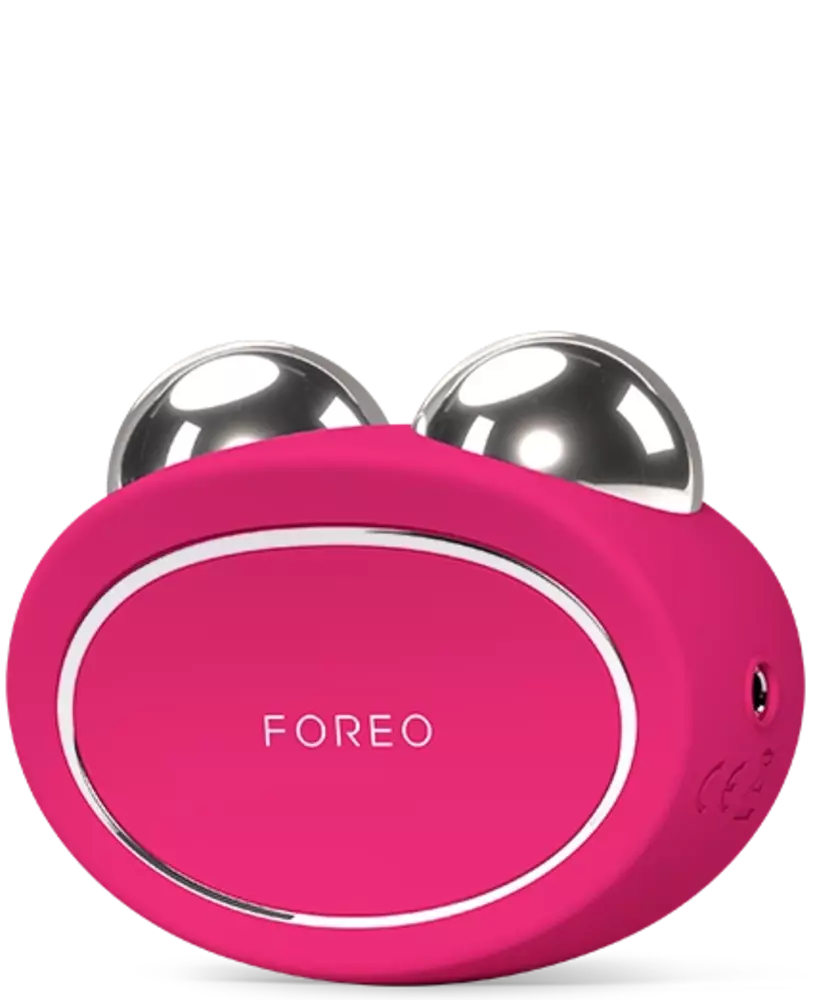
The BEAR 2 wins on the metric that matters most in this category: the likelihood you will still be using it a year from now. Its dual-sphere conductors, adaptive Anti-Shock intensity system and T-Sonic pulsations are packaged into a two-minute daily protocol that removes almost every point of friction that causes at-home devices to be abandoned. It is small enough to keep on the vanity, comfortable enough to use in the evening without effort, and structured enough that users don't need to interpret protocols themselves. Combined with FOREO's 10-year manufacturer warranty and a well-built, genuinely refined design, it represents the strongest overall balance of supporting rationale, comfort, safety and long-term usability in the current market.
Pros
- +Adaptive current adjusts to individual skin
- +Short, sustainable 2-minute daily protocol
- +T-Sonic pulsations are integrated into the protocol
- +Guided routines via the FOREO For You app
- +10-year manufacturer warranty
Cons
- —Premium price point
- —Best paired with FOREO's Supercharged Serum
- —No interchangeable attachments
Who should buy it
Anyone building a consistent long-term anti-aging routine who values a fast, adaptive daily protocol and modern design over lengthy manual sessions.
Who should avoid it
Users who want interchangeable attachments, longer ritual-style sessions, or FDA-cleared classification specifically may prefer NuFACE Trinity+ or MyoLift Mini.
Device by Device
FOREO
BEAR 2
The BEAR 2 is the flagship of FOREO's microcurrent line and, in many ways, the device that redefined what an at-home microcurrent routine can look like. Instead of the multi-minute manual glides that defined the first generation of at-home devices, BEAR 2 uses dual-zone conductive spheres and FOREO's Anti-Shock system, which reads skin conductivity many times per second and adjusts intensity automatically. The result is a guided two-minute protocol per zone that is comfortable enough to fit into a nightly routine indefinitely.
Key features
- Dual-sphere microcurrent conductors
- Adaptive Anti-Shock intensity control
- T-Sonic pulsations up to 8,000 per minute
- USB rechargeable, ~90-day battery life
- IPX7 water resistance
- Guided routines via the FOREO For You app
Pros
- +Fast, sustainable two-minute daily protocol
- +Adaptive intensity adjusts during use
- +Sleek, travel-friendly single-piece design
- +Backed by a 10-year manufacturer warranty
Cons
- —Premium price point
- —Best paired with FOREO's Supercharged Serum
- —No interchangeable attachments for targeted zones
Best for
Anyone seeking a modern, low-friction daily microcurrent routine, particularly first-time users who want an adaptive experience rather than manual dial-in.
Things to consider
If you prefer traditional NuFACE-style probes, longer ritualistic sessions, or the reassurance of FDA clearance specifically, the compact BEAR 2 may feel too minimal.
Our verdict
The most refined at-home microcurrent device we've assessed and our overall pick for 2026 — the device most likely to still be in daily use a year after purchase.
NuFACE
Trinity+
NuFACE effectively built the at-home microcurrent category, and Trinity+ is the modern flagship of a lineage stretching back nearly two decades. It offers a signature five-minute lift routine, longer 15–20 minute treatment protocols, and a range of interchangeable attachments — including the ELE for the eye and lip area and the Wrinkle Reducer, which adds red-light therapy to targeted zones. Sessions are guided through the NuFACE app, and the platform's clinical credentials, including FDA clearance for facial stimulation, remain a genuine differentiator.
Key features
- FDA-cleared for facial stimulation
- Interchangeable attachments (ELE, Wrinkle Reducer)
- App-guided treatments with structured protocols
- Traditional dual-sphere probes
- Rechargeable base with removable head
Pros
- +FDA-cleared with an established clinical record
- +Longest track record in the at-home category
- +Attachments allow targeted work around eyes and lips
- +Well-supported app with structured routines
Cons
- —Sessions require more time than newer competitors
- —Interchangeable attachments sold separately
- —Requires proprietary primer gel for best results
Best for
Users who enjoy a longer, ritualistic treatment and specifically want the reassurance of FDA-cleared credentials from a legacy brand.
Things to consider
NuFACE provides a structured usage schedule for this device. Follow the current device instructions rather than assuming that more frequent or longer sessions will improve results.
Our verdict
A category-defining device that remains an excellent choice for those who prefer traditional microcurrent form factors and a more structured, spa-inspired routine.
ZIIP
HALO
ZIIP takes a fundamentally different approach to the category. Rather than a single fixed protocol, HALO combines microcurrent and nanocurrent in downloadable, app-driven treatments designed by ZIIP founder Melanie Simon, a celebrity aesthetician. HALO is the second-generation device, offering a slimmer single-piece form factor, USB-C charging, and a continually expanding library of targeted routines — lift, brighten, sculpt, sculpt-and-tone, and periodic seasonal protocols.
Key features
- Combined micro- and nanocurrent output
- App-driven, regularly updated downloadable protocols
- Compact single-piece design
- USB-C charging
- Multiple targeted routines (lift, brighten, sculpt, more)
Pros
- +Deepest customization in the category
- +New protocols released regularly by the brand
- +Single-piece design travels well
- +Nanocurrent broadens the available protocol options
Cons
- —Requires an app-tethered workflow every session
- —Higher up-front cost than most competitors
- —Learning curve for beginners exploring protocols
Best for
Skincare enthusiasts who enjoy varied, protocol-based routines and want ongoing content updates from the brand rather than a single fixed treatment.
Things to consider
If you prefer plug-and-play simplicity, HALO's app-driven model may feel like more effort than reward — the routines are the product as much as the hardware.
Our verdict
The most customizable device in this comparison and the strongest choice for engaged skincare enthusiasts who genuinely enjoy the ritual of choosing and running different protocols.
Therabody
TheraFace PRO
TheraFace PRO isn't a pure microcurrent device — it's a multi-modality handheld that combines percussive massage, microcurrent (via a dedicated ring attachment), LED phototherapy (red, red plus infrared, and blue), and silicone cleansing in a single unit. This positioning makes it unusual in the category: it is best understood as a consolidation tool for people who already know they want massage, LED and microcurrent, and would prefer one premium device to three separate ones.
Key features
- Percussive massage attachments
- Microcurrent ring attachment
- Integrated red, red+IR and blue LED
- Silicone cleansing head
- Rechargeable, app-guided routines
Pros
- +Multi-modality — microcurrent, LED and massage in one
- +Premium build quality and design language
- +Reduces the number of devices in a routine
Cons
- —Microcurrent output is more modest than dedicated devices
- —Bulkier than category leaders like BEAR 2
- —Sits in the highest price bracket of this lineup
Best for
Users who want a single premium device that consolidates massage, LED and microcurrent into one routine, and who value modality breadth over microcurrent depth.
Things to consider
If microcurrent is your priority, a dedicated device such as BEAR 2 or Trinity+ offers a more focused microcurrent-specific workflow.
Our verdict
A strong multi-modality tool that earns its place for users who want consolidation, but not the first choice if microcurrent alone is the goal.
7E Wellness
MyoLift Mini
MyoLift Mini brings a distinctly professional-style microcurrent experience into the home. It uses two probes with cotton tips and follows a treatment approach modeled directly on medical-spa protocols. It is FDA-cleared, widely used by aestheticians for guided at-home routines, and paired with unusually thorough educational content — including protocols developed with practitioners. It is not the most beautiful device in the category, but in our editorial view it offers one of the more professional-style experiences at this price point.
Key features
- FDA-cleared microcurrent output
- Professional-style dual probes with cotton tips
- Multiple intensity levels for graduated use
- Guided app-based treatments and protocols
- Rechargeable, portable form factor
Pros
- +Pro-style experience genuinely usable at home
- +FDA-cleared with strong clinical positioning
- +Excellent educational content and support
Cons
- —Longer sessions than BEAR 2 or app-guided competitors
- —Steeper learning curve for absolute beginners
- —Less design-driven form factor than FOREO or ZIIP
Best for
Users who want a serious, spa-inspired microcurrent workflow and don't mind spending more time per session in exchange for a more clinical experience.
Things to consider
If you prefer a discreet, minimalist device that lives comfortably on a vanity, MyoLift Mini can feel more clinical than beautiful — and that trade-off is entirely a matter of taste.
Our verdict
The most professional-style option in the lineup and an alternative to NuFACE Trinity+ for users who prefer a more involved at-home protocol.
Complete Buying Guide
How microcurrent works
Microcurrent devices deliver low-level electrical impulses through conductive probes, gently stimulating the muscles and tissue beneath the skin. The current mirrors the body's own bioelectrical signals, which is why it is generally imperceptible or lightly tingling in sensation.
Benefits
- Potentially more defined-looking facial contours
- Potential subtle changes in the appearance of the brow and cheek areas
- A temporary post-session glow reported by some users
- A non-invasive step that can fit alongside a skincare routine
- Non-invasive, drug-free routine
Limitations
Microcurrent will not remove deep static wrinkles, restore significant volume loss, or replace surgical or injectable procedures. Results are subtle and require ongoing maintenance to be sustained.
Safety and side effects
Most users experience no side effects beyond mild warmth or a subtle tingling sensation. Occasional users report brief facial fatigue after longer sessions. Rare but reported effects include mild skin redness or dryness, usually resolved by adjusting frequency or gel use.
Who should avoid microcurrent
- People with pacemakers or other implanted electronic devices
- Those with epilepsy or seizure disorders
- Pregnant users
- Anyone with active skin infections, open wounds or recent injectables in the treatment area
- People with metal implants in the face
How often to use microcurrent
Treatment schedules vary by device. Some manufacturers provide short daily protocols, while others recommend different session lengths or frequencies. Follow the instructions for the exact device, including its limits on session length, treatment area and frequency.
How long results last
The available evidence does not establish that visible changes last indefinitely or define a reliable timeline after treatment stops. Manufacturer guidance generally presents microcurrent as an ongoing routine rather than a permanent correction.
How to choose the right device
- Time available: BEAR 2 for short routines, Trinity+/MyoLift for longer sessions.
- Form factor: single-piece devices for travel, dual-probe devices for pro-style routines.
- App experience: important for ZIIP HALO and Trinity+, less critical for BEAR 2.
- Additional modalities: TheraFace PRO consolidates several tools, but at a higher price.
- Budget: expect $250–$500 for reputable devices.
Microcurrent vs LED therapy
Microcurrent targets facial muscles for tone and contour, while LED therapy uses specific wavelengths of light to influence cellular activity in the skin. The two are complementary rather than interchangeable. For a deeper explanation of LED, see our guide to LED therapy.
Microcurrent vs radio frequency
Radio frequency (RF) devices heat the deeper layers of the skin to encourage collagen remodeling and gradual skin tightening. Microcurrent, by contrast, works at the level of the facial muscles, using very low-level current to encourage tone and contour. The two are addressing different tissues and different goals: microcurrent is a muscle-toning tool, RF is a skin-tightening tool. Many users combine them on alternating days, though it is rarely necessary — most it is sensible to learn one device's recommended protocol before adding another.
Microcurrent with retinol
Microcurrent should be performed on clean, dry skin with a water-based conductive gel. Retinol is applied afterward, once the gel has been removed and the skin has settled. Applying retinol immediately before microcurrent can increase the risk of irritation, particularly for those new to retinoids. Beginners layering retinol into a routine should start slowly — our Retinol for Beginners guide covers pacing and sensitivity considerations in detail.
Microcurrent with vitamin C
Vitamin C serums are generally compatible with microcurrent and, for most users, best applied in the morning on their own. If you want to use both on the same day, apply your vitamin C serum after cleansing, allow it to absorb, then perform your microcurrent session on clean skin using a water-based conductive gel. Wipe away any residual gel afterward and continue with moisturizer and SPF. Avoid layering the gel directly over highly concentrated actives, which can compromise both the active and the current.
Microcurrent for men
All five devices in this comparison are equally suitable for men. The most common goals in men — a more defined jawline, subtle temple lift, and reduced under-eye puffiness — are common reasons people consider microcurrent, and the short daily protocols of devices like BEAR 2 tend to integrate easily into simpler routines.
PoshBrand Expert Tips
Get more from your microcurrent routine
- 01. Always use a conductive gel. Microcurrent needs moisture to travel efficiently. Dry-gliding reduces results and can cause irritation.
- 02. Prioritize consistency over intensity. Two Follow the device's recommended schedule rather than using occasional longer or higher-intensity sessions.
- 03. Take monthly progress photos. Microcurrent any visible changes may be subtle. A consistent lighting setup can make comparisons more reliable than daily mirror-checking.
- 04. Avoid overtreatment. Do not exceed the session length, intensity or frequency in the specific device's instructions.
- 05. Layer thoughtfully. Follow with your usual serum, moisturizer and SPF. If using retinol, apply afterward, not before.
How We Evaluate Products
PoshBrand's rankings are grounded in editorial analysis, not sponsored placement. For this guide, we assessed each device on the basis of publicly available technical specifications, peer-reviewed research on microcurrent stimulation, manufacturer clinical data, third-party consumer feedback, regulatory status, safety documentation, warranty and long-term usability.
We do not claim hands-on testing where none has been conducted. Where a device is available in multiple regional variants, we prioritized the specifications and clearances relevant to the North American and European markets. Where a purchase link is included, it may be an affiliate link — this never influences our rankings, and all affiliate relationships are disclosed on every product mentioned.
Our ratings are qualitative editorial assessments rather than calculated scores. We do not use weighted formulas or laboratory measurements. Each device is placed in a tier — Top pick, Highly recommended or Recommended — based on how well it balances five considerations: the strength and independence of the supporting evidence, ease of daily use (session length and guidance), safety features and regulatory status, versatility, and overall value including warranty. "Recommended (niche)" indicates a capable device that suits a narrower type of user.
Our overall pick
Start with FOREO BEAR 2
Adaptive microcurrent, a two-minute daily protocol and a 10-year warranty make BEAR 2 the easiest microcurrent device to actually stick with.
Conclusion
All five devices in this comparison offer distinct ways to incorporate at-home microcurrent, although visible results are not guaranteed. The question is less which device is objectively best and more which device fits the routine you will actually maintain.
For most readers, the FOREO BEAR 2 is the strongest overall choice — a two-minute adaptive protocol, an unusually long warranty and a form factor that removes almost every excuse not to use it. If you specifically want FDA clearance and a more traditional, ritualistic experience, NuFACE Trinity+ remains a genuine benchmark. Enthusiasts who enjoy experimenting with different protocols will get the most out of ZIIP HALO, while readers looking to consolidate microcurrent, LED and massage into a single device should consider the TheraFace PRO. Finally, MyoLift Mini is the closest at-home approximation of a professional treatment and rewards users who value clinical depth over minimalist design.
Whichever device you choose, regular use according to the manufacturer's schedule matters more than intensity, form factor or price — though even consistent use does not guarantee results, which are typically modest and vary between individuals. Pick the device you are most likely to reach for on a busy evening and follow its recommended protocol.
Frequently asked questions
Do microcurrent devices actually work?+
The evidence is promising but limited. Laboratory research supports a biological rationale, and smaller, often manufacturer-funded studies report modest improvements in facial tone and contour with consistent use. Results vary between individuals and are not established as permanent. Microcurrent devices are best viewed as ongoing cosmetic routines rather than instant solutions.
Which microcurrent device is best?+
The best microcurrent device depends on your priorities. For a fast, adaptive, daily routine, the FOREO BEAR 2 is our overall pick. NuFACE Trinity+ is a strong choice for those who want longer, more structured sessions. ZIIP HALO offers the deepest customization through app-based protocols, TheraFace PRO suits those who want several modalities in one tool, and MyoLift Mini appeals to users who want a more professional-style experience at home.
What is the difference between microcurrent and nanocurrent?+
Microcurrent operates in the microampere range (roughly 25–500 µA) and is primarily used for facial muscle toning. Nanocurrent is roughly a thousand times weaker and is typically marketed around skin quality and radiance rather than muscle stimulation. Some devices, such as ZIIP HALO, combine both; most dedicated facial toning devices use microcurrent alone. Microcurrent has the longer research history, so we treat nanocurrent as a complementary feature rather than a deciding factor.
Is FOREO better than NuFACE?+
Neither is universally 'better' — they take different approaches. FOREO BEAR 2 emphasizes short, adaptive daily sessions with automatic intensity control, and includes T-Sonic pulsations. NuFACE Trinity+ uses a more traditional protocol with longer sessions and interchangeable attachments. Users who prefer minimal daily routines often prefer FOREO; those who enjoy a more ritualistic routine tend to prefer NuFACE.
How long do results last?+
Evidence does not establish one reliable duration for visible changes. Manufacturer guidance generally treats microcurrent as an ongoing routine, but recommended schedules vary by device. Follow the instructions supplied with your device rather than applying a universal maintenance schedule.
Can I use microcurrent every day?+
Treatment frequency is device-specific. Some at-home devices include daily protocols, while others use different schedules. Follow the manufacturer's instructions for your exact model and do not exceed its recommended session length or frequency.
Can I combine LED therapy with microcurrent?+
Yes. Microcurrent and LED therapy target different biological pathways — muscle tone versus cellular activity in the skin — and are commonly combined in professional and at-home routines. Many users perform LED therapy first, then apply conductive gel and follow with microcurrent. Always allow the skin to be clean and dry between steps and follow each device's guidance.
Can I use retinol together with microcurrent?+
Yes, but timing matters. Microcurrent should be performed on clean skin with a water-based conductive gel. Retinol is best applied afterwards, once the gel has been rinsed or wiped away and the skin has settled. Avoid applying retinol immediately before microcurrent, as this can increase the risk of irritation.
Can I use vitamin C with microcurrent?+
Vitamin C serums are generally compatible with microcurrent. Apply your vitamin C serum in the morning as usual, then perform microcurrent on clean skin using a water-based conductive gel. Once the session is complete, remove any residual gel and continue with moisturizer and SPF. Because vitamin C is best applied to bare skin, use it before microcurrent rather than layering it under the gel.
How is microcurrent different from radio frequency?+
Microcurrent targets the facial muscles with very low-level electrical stimulation, producing gradual toning and lift. Radio frequency (RF) uses higher-frequency energy to heat the deeper layers of the skin, stimulating collagen remodeling and skin tightening. The two technologies address different tissues and goals: microcurrent is a muscle-toning tool, while RF is a skin-tightening tool. Some people use both on alternating days, following each manufacturer's guidance.
How soon will I see results?+
Some users and manufacturers report a temporary post-session glow, while small studies and manufacturer data describe modest contour changes after repeated use. The evidence does not establish a universal timeline, and results vary by device, schedule and individual.
Is microcurrent safe for sensitive skin?+
In most cases, yes. Microcurrent itself does not exfoliate or disrupt the skin barrier. However, the conductive gel and any actives applied around the session can affect sensitive skin. If you have rosacea, active irritation or a compromised barrier, start with the lowest intensity, keep sessions short, and consult a dermatologist if you are unsure.
Do I have to use the brand's own conductive gel?+
Manufacturers recommend their proprietary gels because they are formulated to conduct current effectively without leaving residue that can affect the device. Third-party water-based conductive gels can work, but using unapproved products may void the warranty and, in some cases, reduce results. When in doubt, follow the manufacturer's guidance.
Can microcurrent replace Botox or fillers?+
No. Microcurrent works on muscle tone and does not paralyze muscles the way botulinum toxin does, nor does it add volume the way dermal fillers do. It can complement in-office treatments and, for some users, extend the interval between them, but it is not a substitute for them.
Written by
The PoshBrand Editors
Independent editorial team covering skincare, anti-aging and at-home beauty technology. We reference published research and manufacturer documentation, and we disclose affiliate relationships on every product we mention.
Related reading
The Dispatch
New reviews, in your inbox.
Once a week: the most rigorous anti-aging research, the products worth your money, and the ones to skip.