

Guide · LED Therapy
LED Therapy Explained: Red, Blue & Near-Infrared Light
An editorial explainer on what each wavelength actually does, what published research supports, and how to use at-home LED devices responsibly.

Introduction
LED (light-emitting diode) therapy, also referred to as photobiomodulation, uses specific wavelengths of visible and near-infrared light to influence activity in skin cells. Originally studied by NASA for wound healing and later adopted in dermatology clinics, the technology has become one of the most common non-invasive treatments offered alongside facials, peels and microneedling.
In the last decade, at-home devices — masks, panels and handhelds — have made these same wavelengths broadly accessible. This guide explains, in editorial terms, what each color of light does, what the research supports, how to use LED responsibly, and how it fits into a broader skincare routine. It is intended as an educational overview, not medical advice.
How LED Therapy Works
LED devices emit narrow bands of light at defined wavelengths, measured in nanometers (nm). Unlike lasers, LEDs do not cut, ablate or significantly heat the skin. Instead, photons are absorbed by chromophores inside skin cells — most notably by cytochrome c oxidase within mitochondria. This absorption is thought to modulate cellular energy production and downstream signaling pathways involved in repair, inflammation and pigment production.
The depth a wavelength reaches, and the biological response it elicits, depend on its position on the visible-to-infrared spectrum. Shorter wavelengths (blue) interact primarily at the skin's surface, while longer wavelengths (red and near-infrared) penetrate progressively deeper into the dermis.
Red Light (approx. 620–700 nm)
Red light is the most extensively studied wavelength range for cosmetic anti-aging use. It reaches into the upper dermis, where it interacts with fibroblasts — the cells responsible for producing collagen and elastin. Peer-reviewed studies of both in-clinic and at-home red-light devices have reported measurable improvements in skin roughness, elasticity and the appearance of fine lines following several weeks of consistent treatment.
Reported outcomes are typically gradual and cumulative rather than immediate. Most clinical protocols involve short sessions several times per week over an 8-to-12-week evaluation window. Red light is generally considered well tolerated across skin tones and is often combined with near-infrared light in modern masks to broaden the treatment profile.
Blue Light (approx. 400–470 nm)
Blue light sits at the shorter end of the visible spectrum and remains largely at the surface of the skin. Its most established cosmetic application is inflammatory acne. Blue light around 415 nm can excite porphyrins produced by Cutibacterium acnes (formerly Propionibacterium acnes), a bacterium implicated in inflammatory breakouts, contributing to a reduction in bacterial load on the skin surface.
Clinical trials have documented decreases in inflammatory acne lesion counts with regular blue-light use, particularly when combined with red light. Blue light does not replace prescription treatment for moderate or severe acne, and results are best evaluated over weeks rather than days.
Near-Infrared Light (approx. 800–900 nm)
Near-infrared (NIR) light is invisible to the human eye and penetrates the deepest of the three wavelength ranges commonly used in cosmetic LED devices. It has been studied for its role in supporting wound healing, modulating inflammatory response and contributing to cellular repair processes in the deeper dermis and adjacent tissue.
In consumer devices, NIR is frequently paired with red light. The rationale is that the two wavelengths act in complementary layers of the skin: red at the level of fibroblasts, NIR extending into the deeper dermis. As with red light, meaningful outcomes are associated with consistent use over weeks or months rather than single sessions.
Red vs Blue vs Near-Infrared
The three wavelength ranges most commonly used in at-home LED devices differ meaningfully in depth, target and typical application. A concise comparison:
| Light | Wavelength | Primary purpose | Typical skincare application |
|---|---|---|---|
| Red | 620–700 nm | Support collagen and elastin activity in the upper dermis | Fine lines, firmness, tone, general anti-aging maintenance |
| Blue | 400–470 nm | Reduce surface acne-related bacteria | Inflammatory acne, oil-prone skin, blemish management |
| Near-Infrared | 800–900 nm | Deeper-tissue support for repair and inflammatory modulation | Recovery, redness, post-procedure care, combined anti-aging |
What Results to Realistically Expect
LED therapy is often presented online as a rapid transformation. Published clinical studies generally describe a different picture: gradual, cumulative improvements observable after weeks or months of consistent use, rather than visible changes after a single session.
- Weeks 1–2: Skin frequently appears calmer and more even, though changes are subtle at this stage.
- Weeks 4–8: Studies commonly report improvements in skin texture, softening of superficial fine lines and, for blue-light protocols, reductions in inflammatory acne lesion counts.
- Weeks 8–12+: Firmness and tone tend to shift most visibly at this point. Discontinuing use typically leads to a gradual loss of gains.
LED therapy is best framed as a long-horizon addition to a routine, comparable to a well-formulated retinol: consistency over months is more predictive of outcomes than intensity in any single session. For a decision-oriented overview of whether LED fits a given routine, see Is LED Therapy Worth It?.
Best Practices
The following principles apply across most cosmetic LED devices and align with typical manufacturer guidance:
- Use on clean, dry skin. Cleanse thoroughly and allow the skin to dry before treatment. Heavy creams, mineral SPF or thick occlusive layers can scatter light.
- Follow manufacturer instructions. Recommended session length, frequency and any eye-protection guidance are device-specific and should not be exceeded.
- Apply skincare after treatment unless the manufacturer specifies otherwise. Serums and moisturizers layered after a session help support the skin barrier and lock in hydration.
- Prioritize consistency over intensity. Clinical studies generally describe gradual improvements after regular use over several weeks. Longer or more intense single sessions do not compensate for irregular use.
- Pair with sun protection. Daily broad-spectrum SPF supports and protects the results of any anti-aging protocol, LED included.
Who Should Consider LED Therapy?
LED therapy is generally suited to healthy adults seeking a gentle, non-invasive addition to an anti-aging or clarifying routine. It may be a considered option for:
- Adults noticing early signs of aging — fine lines, reduced firmness, dullness or uneven tone.
- Individuals with mild to moderate inflammatory acne who are looking for a non-pharmacological adjunct to their existing topical routine.
- People with sensitive skin who tolerate strong exfoliating actives poorly and want a lower-intensity supportive tool.
- Users of established actives such as retinol or vitamin C who want to add a device that supports the skin between and after active use.
- Anyone interested in a repeatable, low-effort ritual — LED sessions are typically short and easy to anchor to an existing habit such as evening cleansing.
For a broader framework on which device format fits which goal, How to Choose the Right FOREO Device is a useful next read.
Who Should Avoid LED Therapy?
LED therapy is generally considered low-risk for cosmetic use, but it is not appropriate in every context. Consider avoiding it, or consulting a qualified clinician first, in the following situations:
- Pregnancy or breastfeeding. Data specific to cosmetic LED use during pregnancy is limited; speak with a clinician before starting.
- Photosensitive medical conditions, including lupus and certain porphyrias, where light exposure can worsen symptoms.
- Medications that increase photosensitivity, such as some antibiotics, oral retinoids or acne treatments. Discuss timing and suitability with the prescribing clinician.
- Active skin cancer or undiagnosed lesions in the treatment area. Any suspicious lesion should be evaluated medically before any at-home device is used over it.
- Photosensitive epilepsy. Most cosmetic LED masks emit steady, non-strobing light, but manufacturer documentation should be reviewed before use.
- Recent aggressive procedures — deep peels, ablative lasers or fresh open skin — until a clinician clears LED use as part of recovery.
When in doubt, a short consultation with a board-certified dermatologist is the safest way to determine whether LED therapy is appropriate.
Devices and Formats
At-home LED devices generally fall into three formats: full-face masks, panels and targeted handheld tools. Masks provide even coverage across the face and are typically hands-free, which tends to support adherence. Panels can treat larger areas but require the user to remain positioned in front of them. Handheld devices are best suited to small, targeted areas.
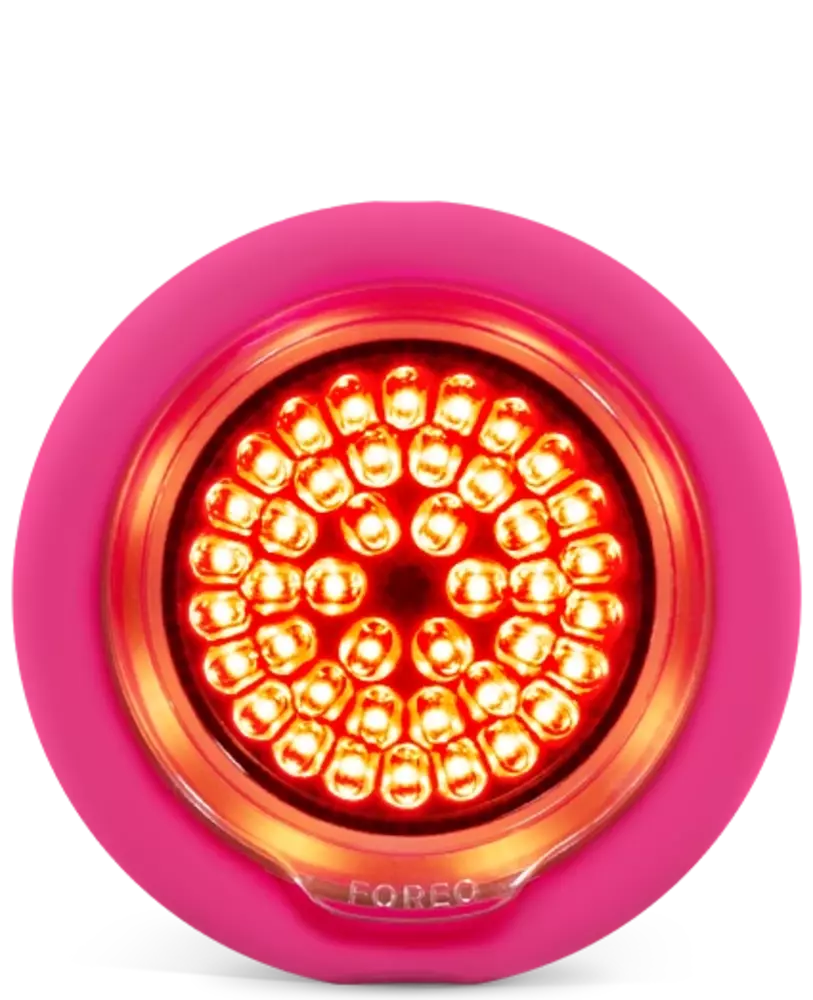
One example in the mask category is the FOREO FAQ™ 202, a hands-free silicone LED mask featuring 202 medical-grade LEDs and wavelengths commonly used in professional LED therapy. Its hands-free design is aimed at short, repeatable sessions, which aligns with the consistency-oriented protocols described in clinical literature.
Devices that combine LED with other modalities — thermotherapy, cryotherapy or microcurrent — can be useful, but the LED component should still be evaluated on the fundamentals: published wavelengths, coverage, safety documentation and fit with an actual routine. For more on comparing formats, see the FOREO BEAR™ 2 Review and the future FOREO LUNA™ 4 Review.
Full-face LED mask
FOREO FAQ™ 202 Anti-Aging LED Mask
Professional anti-aging LED treatment for home use.
Building LED Into a Routine
LED therapy is most effective when treated as one considered element within a broader routine rather than a standalone solution. A typical evening sequence might involve cleansing, drying the skin, completing a short LED session and then applying serums and moisturizer.
LED and established topical actives are generally compatible. Many routines pair red or red-plus-NIR LED with a retinol protocol on alternating evenings, alongside daily antioxidant use and broad-spectrum SPF in the morning. For a fully worked example that combines devices and skincare, see Building an Anti-Aging Routine with FOREO and RoC.
Explore LED devices
Browse the FOREO LED lineup
From the full-face FAQ™ 202 mask to targeted devices for the eye area and jawline, FOREO's LED tools are engineered for consistent, comfortable at-home use.
Frequently asked questions
How long before LED therapy shows visible results?+
Clinical studies typically evaluate LED protocols over 8 to 12 weeks of consistent use. Users often report calmer, more even-looking skin within the first few weeks, with more visible changes in firmness and fine lines developing gradually over subsequent months.
Can LED therapy be used every day?+
Frequency depends on the device. Many full-face masks are designed for 3–5 sessions per week of 10–20 minutes, while some handheld tools may be used daily on targeted areas for shorter periods. Always follow the manufacturer's protocol — additional time does not compensate for inconsistent use.
Is LED therapy safe for sensitive skin?+
Cosmetic LED is generally considered well tolerated across skin types, including sensitive skin, because it does not ablate, heat or exfoliate the skin surface. Individuals with photosensitive conditions or on photosensitizing medications should consult a clinician first.
Can I combine LED therapy with retinol or vitamin C?+
Yes. LED and topical actives such as retinol and vitamin C are commonly used within the same routine because they support skin renewal through different mechanisms. LED sessions are typically performed on clean, bare skin, with serums and moisturizers applied afterward.
Does the number of LEDs on a device matter?+
LED count alone is not a reliable indicator of quality. Wavelength accuracy, coverage, dose per session and safety certifications are more meaningful factors. Published wavelengths and clinical rationale from the manufacturer are useful signals.
Is at-home LED therapy as effective as in-clinic treatment?+
In-clinic devices are typically higher-powered and used less frequently, while at-home devices deliver lower doses more often. Both can produce visible results when used consistently, but expectations should be calibrated to the device class and treatment schedule.
Do I need eye protection during LED therapy?+
Follow the manufacturer's guidance. Many masks are designed to be safe with eyes closed, while some devices — particularly higher-powered NIR panels — supply or recommend dedicated eye protection.
Written by
The PoshBrand Editors
Independent editorial team covering skincare, anti-aging and at-home beauty technology. We reference published dermatology research and manufacturer documentation, and we disclose affiliate relationships on every product we mention.
Continue in the FOREO hub
The Dispatch
New reviews, in your inbox.
Once a week: the most rigorous anti-aging research, the products worth your money, and the ones to skip.